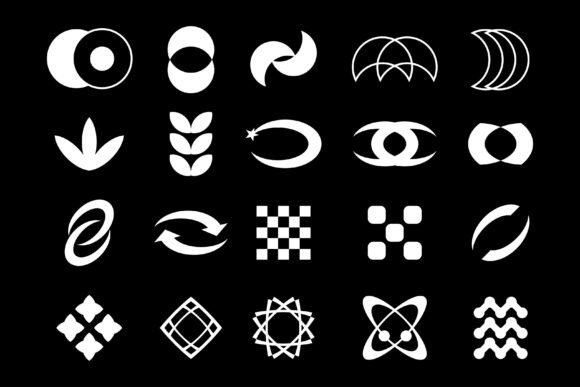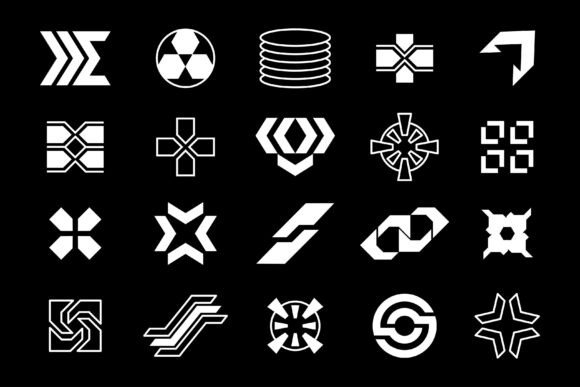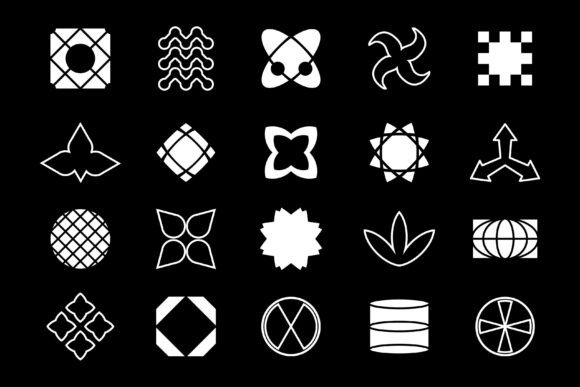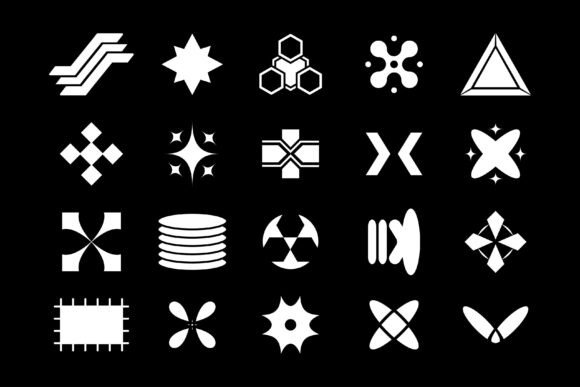
Futuristic Cyberpunk HUD Elements Set: Elevating Your Sci-Fi Interface Design
In the rapidly evolving landscape of digital design, creating immersive user experiences often requires more than just standard buttons and menus. Designers working on video games, virtual reality applications, or high-concept web projects frequently struggle to find assets that truly capture the gritty, high-tech aesthetic of a cyberpunk world. This is where a specialized Futuristic Cyberpunk HUD Elements Set becomes an indispensable resource. These collections provide the essential building blocks needed to construct complex Heads-Up Displays (HUDs) that feel authentic, functional, and visually striking without requiring weeks of manual illustration.
Understanding the Value of a Cyberpunk Interface Kit
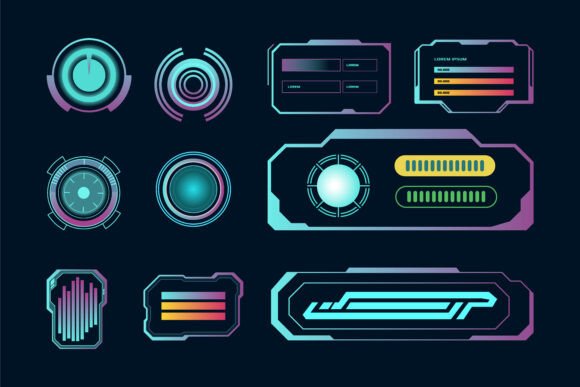
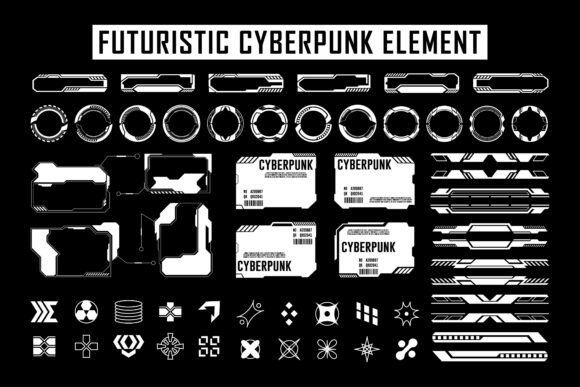
A Futuristic Cyberpunk HUD Elements Set is a curated collection of graphical components designed to mimic the look of advanced computer interfaces found in science fiction. These sets typically include data readouts, targeting reticles, status bars, navigation grids, holographic icons, and decorative geometric shapes. The defining characteristic of this style is its blend of neon brightness against dark backgrounds, often featuring glitch effects, angular lines, and a sense of raw, exposed technology.
For designers, the primary challenge is not just finding images that look cool, but ensuring they are versatile enough to be integrated into various projects. A static image might look good in one context but fail when resized or adapted for a different screen resolution. That is why professional kits are delivered in both vector and raster formats. The vector files allow for infinite scalability, while the JPG previews offer a quick visual reference. This dual-format approach ensures that whether you are designing a massive billboard for a game launch or a tiny icon for a mobile app, the quality remains uncompromised.
Overcoming Common Design Challenges
Many creative professionals face significant hurdles when attempting to build a sci-fi interface from scratch. The most common issue is time management. Crafting intricate, glowing data streams and complex mechanical details can consume hundreds of hours. For freelancers working under tight deadlines or small teams with limited resources, starting from zero is often not a viable option. Furthermore, maintaining visual consistency across dozens of interface elements is difficult without a cohesive system.
Another frequent challenge is technical compatibility. Designers need assets that integrate seamlessly into their existing workflows. If a design file is locked in a proprietary format or lacks editable layers, it becomes a dead weight rather than a tool. A well-structured Cyberpunk HUD elements set futuristic interface sci fi addresses these pain points by providing organized, layered files that are ready for immediate modification. This allows creators to focus on the layout and user experience rather than getting bogged down in asset creation.
The Importance of Vector Flexibility
One of the most critical features of a high-quality design pack is the inclusion of vector files. Unlike raster images, which lose quality when enlarged, vector graphics are mathematical descriptions of shapes. This means every line, curve, and glow effect can be resized, recolored, and reshaped without any loss of fidelity. Using a vector editing application like Adobe Illustrator, designers can deconstruct the provided elements to fit their specific project needs.
Imagine needing a health bar that matches the exact color palette of your game's UI. With a vector-based Futuristic Cyberpunk HUD Elements Set, you can simply select the stroke or fill and change the hex code instantly. You can also extend lines, duplicate patterns, or merge shapes to create entirely new components. This level of control transforms a static template into a dynamic toolkit, empowering designers to customize every aspect of the interface to match their unique vision.
Practical Applications Across Industries
The utility of these interface assets extends far beyond traditional video game development. While gamers immediately recognize the aesthetic, the underlying principles of clear, data-rich visualization are valuable in many fields. Here are several practical ways different users can leverage these resources:
- Game Development: Indie developers and AAA studios alike use these sets to create player dashboards, inventory screens, and mission trackers. The pre-made elements speed up prototyping, allowing teams to iterate quickly on gameplay mechanics.
- Web Design and Branding: Tech companies and startups often adopt the cyberpunk aesthetic to convey innovation and forward-thinking. A website landing page featuring subtle HUD animations or background elements can significantly enhance brand perception.
- Virtual and Augmented Reality: In VR environments, the user interface must feel like part of the physical space. High-resolution vector elements can be projected onto 3D models to create realistic holographic displays within the virtual world.
- Motion Graphics and Film: Video editors and VFX artists utilize these assets to overlay information on footage, creating the illusion of a character viewing a tactical display or hacking a secure terminal.
Getting Started: Unpacking and Customizing Your Assets
Once you have acquired the Futuristic Cyberpunk HUD Elements Set, the next step is accessing the files efficiently. Most design packs are compressed into a single ZIP file to ensure fast download speeds and organized storage. To access the contents, you will need extraction software such as WinZIP, WinRAR, or the built-in extraction tools available on modern operating systems.
The process is straightforward: locate the downloaded file, double-click it, and choose "Extract All" or "Extract Here." This action will unpack the folder structure, revealing separate directories for the vector source files and the high-resolution JPG previews. It is highly recommended to organize these folders clearly before beginning your work. Keep the vector files safe as your master source, and use the JPGs for quick mockups or presentations.
When you open the vector files in Adobe Illustrator, you will likely find a well-organized layer structure. Each element—be it a corner bracket, a data stream, or a warning icon—is usually placed on its own layer or grouped logically. This organization is crucial for efficient workflow. You can toggle visibility on specific layers to see how different combinations look, or lock layers you aren't currently editing to prevent accidental changes.
Tailoring the Design to Your Needs
Different users will approach customization based on their specific goals. A graphic designer focusing on print media might prioritize high-contrast colors and sharp lines to ensure readability at large scales. Conversely, a UI/UX designer for a mobile app might soften the edges and reduce the saturation to ensure the interface doesn't overwhelm the user on a small screen.
Consider the narrative of your project. If you are designing for a dystopian future, you might want to add noise textures or slight distortions to the clean vector lines to simulate wear and tear. If the setting is a sleek, utopian space station, you might keep the lines pristine and add smooth gradients. The beauty of a Cyberpunk HUD elements set futuristic interface sci fi lies in its adaptability. It serves as a blank canvas that responds to your creative direction.
Strategic Considerations for Implementation
While these assets provide a strong foundation, successful implementation requires thoughtful integration. Avoid the temptation to use every element in the pack; a cluttered interface defeats the purpose of a HUD, which is to present information clearly. Instead, curate a subset of elements that serve a specific function. Consistency is key—stick to a unified color scheme and line weight throughout your design to maintain visual harmony.
Furthermore, consider the user experience. In a game or application, the HUD should guide the user without distracting them. Use the bright neon accents of the cyberpunk style to highlight critical information, such as low health or incoming threats, while keeping secondary data more subdued. By balancing aesthetics with functionality, you create an interface that is not only visually impressive but also intuitive and effective.
Ultimately, investing in a professional Futuristic Cyberpunk HUD Elements Set is about empowering your creativity. It removes the barriers of technical difficulty and time constraints, allowing you to focus on what matters most: telling your story and delivering a compelling experience. Whether you are a seasoned professional or an aspiring creator, these tools provide the perfect bridge between imagination and execution, enabling you to build worlds that feel alive and technologically advanced.