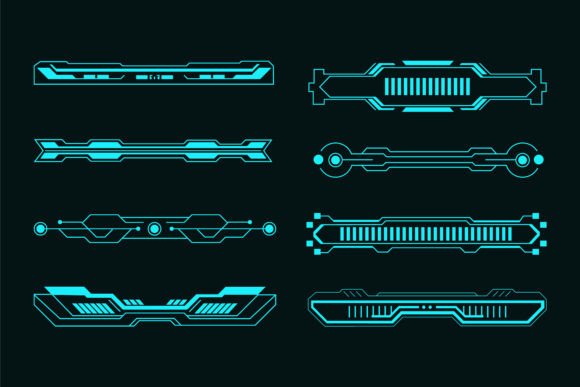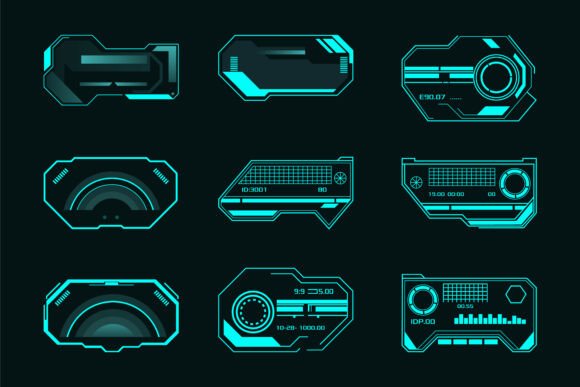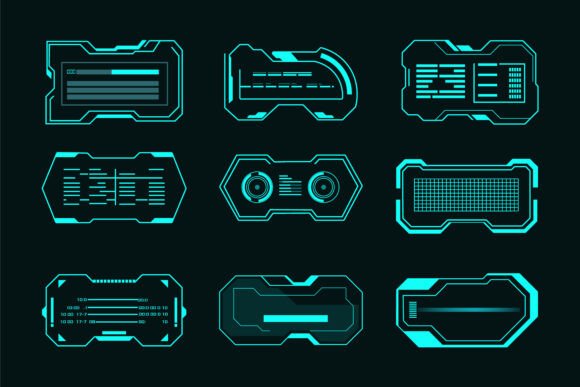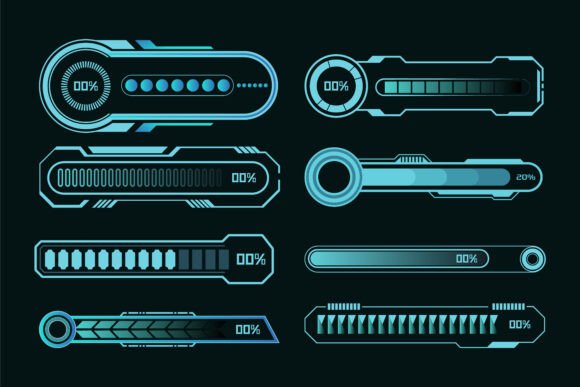
Cyber Tech Progress Bar Collection: Defining the Future of Digital Interfaces
In an era where digital interactions are as common as breathing, the visual language of user interfaces has undergone a profound transformation. The days of simple gray rectangles filling up linearly are largely behind us, replaced by dynamic, immersive elements that signal speed, precision, and technological sophistication. At the forefront of this shift is the Cyber Tech Progress Bar Collection, a suite of design assets that redefines how we visualize data loading, system status, and process completion. These are not merely decorative flourishes; they are critical components of modern user experience (UX) that bridge the gap between complex backend operations and human perception.
For professionals ranging from UI/UX designers to software developers and digital marketers, understanding the power of these advanced elements is essential. The collection represents more than just a stylistic choice; it embodies a specific aesthetic known as "cyberpunk" or "sci-fi HUD" (Heads-Up Display), characterized by glowing neon blue load indicators, intricate digital meters, and high-detail tech display components. As screens become the primary window into our professional and personal lives, the quality of feedback provided by these interfaces directly influences user trust, engagement, and satisfaction.
The Evolution from Functional to Immersive Feedback
To appreciate the significance of the Cyber Tech Progress Bar Collection – Advanced Sci-Fi HUD UI Elements Featuring Glowing Neon Blue Load Indicators, Digital Meters, Futuristic Interface Bars, and High-Detail Tech Display Components, one must look at the trajectory of interface design. Early computing relied on text-based commands and rudimentary ASCII art to indicate progress. As graphical user interfaces (GUIs) emerged in the late 20th century, the focus was purely on utility: a bar filled up to show a file was copying, nothing more. It was functional but devoid of personality.
Over the last two decades, however, the digital landscape has shifted towards immersion. Users no longer want to simply wait for a process to complete; they want to feel connected to the machine performing the task. This psychological need has driven the evolution of progress indicators into complex visual narratives. The modern expectation is for interfaces that feel alive, responsive, and intelligent. This is where futuristic interface bars come into play. By incorporating elements like pulsating light effects, segmented digital readouts, and holographic-style overlays, designers can transform a moment of waiting into a moment of anticipation.
This evolution mirrors broader trends in technology consumption. Just as smartphones moved from basic communication tools to powerful multimedia hubs, software interfaces have evolved from static pages to fluid, interactive environments. The integration of sci-fi aesthetics is not accidental; it taps into a cultural fascination with the future, suggesting that the software being used is cutting-edge, fast, and reliable. When a user sees a glowing neon blue load indicator, the subconscious message is one of high performance and advanced capability.
Why Aesthetics Matter in User Retention
The practical implications of adopting these advanced UI elements extend far beyond visual appeal. In the competitive digital marketplace, user retention is heavily influenced by perceived performance. Research in UX psychology suggests that users often judge the speed of a system based on its visual feedback rather than actual processing time. A well-designed, engaging progress bar can make a three-second wait feel instantaneous, whereas a generic, static bar can make the same duration feel interminable.
For businesses and entrepreneurs, this distinction is crucial. If a customer is uploading a large dataset, purchasing a digital product, or syncing cloud files, their patience is tested during those moments. The Cyber Tech Progress Bar Collection offers a solution by providing high-engagement visuals that keep the user's attention focused on the screen rather than leading them to abandon the task. The intricate details found in digital meters and futuristic interface bars serve as cognitive anchors, reassuring the user that the system is active and working efficiently.
Furthermore, these elements contribute to brand identity. A startup launching a fintech app or a gaming platform can leverage the sleek, high-tech look of neon blue indicators to align their brand with innovation and security. The visual consistency provided by a comprehensive collection ensures that every touchpoint in the user journey reinforces the brand's core values. This consistency builds trust, which is the currency of the digital economy.
Integrating Sci-Fi HUD Elements into Modern Workflows
Implementing the Cyber Tech Progress Bar Collection – Advanced Sci-Fi HUD UI Elements Featuring Glowing Neon Blue Load Indicators, Digital Meters, Futuristic Interface Bars, and High-Detail Tech Display Components requires a strategic approach that balances style with functionality. While the aesthetic is undeniably striking, it must never compromise usability. For creators and developers, the challenge lies in integrating these complex graphics without introducing unnecessary latency or accessibility barriers.
Modern development frameworks have made this integration smoother than ever. With the advent of CSS animations, SVG scalability, and WebGL capabilities, high-detail tech display components can be rendered efficiently across various devices, from high-end desktop monitors to mobile screens. The key is to use vector-based assets that scale perfectly, ensuring that the crisp lines and glowing effects remain sharp regardless of resolution. This adaptability is vital for a responsive design strategy that caters to a diverse audience using different hardware.
Moreover, the workflow for creating these interfaces has become more collaborative. Designers can now prototype these futuristic interface bars using tools that allow for real-time interaction testing. This means that before a single line of code is written, stakeholders can see how the glowing neon blue load indicators react to different states—idle, loading, error, or completion. This iterative process ensures that the final product meets both aesthetic goals and technical requirements.
For freelancers and small business owners who may not have a dedicated design team, utilizing pre-made collections like the Cyber Tech Progress Bar Collection is a game-changer. It eliminates the need to build complex animations from scratch, saving valuable time and resources. Instead of spending weeks perfecting a single loading animation, professionals can select from a library of polished, production-ready assets and customize them to fit their specific color schemes and branding guidelines. This democratization of high-end design allows smaller players to compete visually with industry giants.
Practical Applications Across Industries
The versatility of these advanced UI elements makes them suitable for a wide range of applications beyond traditional software. In the gaming industry, health bars, skill cooldowns, and inventory management systems frequently utilize HUD-style metrics. The precision of digital meters and the clarity of futuristic interface bars provide players with instant, actionable information during high-stakes gameplay. Similarly, in the automotive sector, next-generation dashboards are increasingly adopting these cyber-tech aesthetics to display vehicle diagnostics, navigation data, and battery levels for electric vehicles.
In the realm of education and e-learning, progress tracking is essential for student motivation. Replacing standard percentage counters with engaging, gamified progress bars can significantly increase course completion rates. Imagine a learning management system where completing a module fills a glowing neon blue load indicator, unlocking the next level of content. This visual reward system taps into the same psychological triggers that make video games addictive, fostering a sense of achievement and forward momentum.
Even in healthcare and enterprise management, where clarity is paramount, these elements find their place. Complex data visualization dashboards benefit from the structured layout of digital meters, allowing analysts to quickly grasp system statuses at a glance. The high-contrast nature of neon indicators ensures that critical alerts stand out against darker backgrounds, reducing eye strain during long monitoring sessions while maintaining a professional, modern appearance.
Future-Proofing Your Digital Presence
As we look toward the future, the demand for immersive, high-fidelity interfaces will only grow. The rise of virtual reality (VR), augmented reality (AR), and the metaverse places a premium on 3D and holographic-style UI components. The Cyber Tech Progress Bar Collection serves as a foundational step in preparing digital products for these emerging platforms. The principles of depth, lighting, and motion inherent in these designs translate seamlessly into spatial computing environments.
However, it is important to remain grounded. While the allure of futuristic design is strong, it should always serve the user's needs first. Overloading an interface with excessive effects can lead to cognitive overload and distract from the primary task. The most effective implementations are those that strike a balance, using the glow of neon blue load indicators and the precision of digital meters to enhance clarity rather than obscure it.
For professionals aiming to stay ahead of the curve, investing in high-quality UI assets is a strategic move. It signals a commitment to excellence and an understanding of current market preferences. Whether you are building a SaaS platform, a mobile app, or a corporate website, the way you communicate progress to your users defines their experience. By embracing the advanced capabilities of the Cyber Tech Progress Bar Collection – Advanced Sci-Fi HUD UI Elements Featuring Glowing Neon Blue Load Indicators, Digital Meters, Futuristic Interface Bars, and High-Detail Tech Display Components, you are not just updating your visuals; you are elevating your entire digital ecosystem.
Ultimately, the intersection of form and function in modern design is where true innovation happens. As technology continues to evolve, so too will the ways we visualize our interactions with it. Staying informed about these trends and equipping yourself with the right tools ensures that your digital presence remains relevant, engaging, and effective in an increasingly competitive landscape. The future of interface design is bright, glowing, and undeniably futuristic.