Futuristic Window HUD Elements Set: A Designer's Toolkit for Digital Interfaces
In the rapidly evolving landscape of digital design, the demand for interfaces that feel immersive, high-tech, and responsive has never been higher. Whether you are crafting a next-generation video game, building a dashboard for a fintech startup, or designing a virtual reality experience, the visual language of your interface speaks volumes before a single word is read. This is where the Futuristic Window HUD Elements Set becomes an indispensable resource. These assets are not merely decorative; they are functional building blocks that define the user experience in sci-fi, tech-heavy, and modern digital environments.
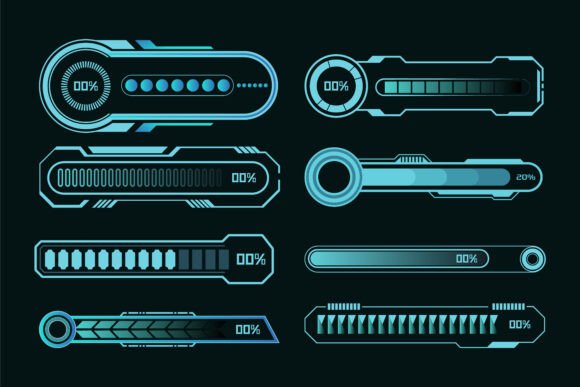
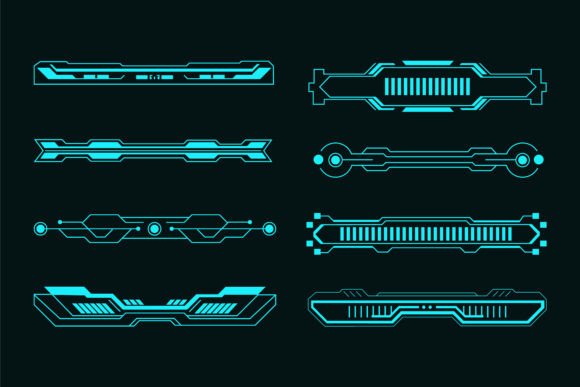
The core appeal of this specific set lies in its aesthetic precision. Designed with bright blue neon frames, these elements capture the quintessential "cyber" look that has permeated pop culture and professional technology alike. However, beyond the initial visual impact, the true value of the Futuristic Window HUD Elements Set is found in its versatility and technical robustness. It bridges the gap between artistic vision and practical application, allowing creators to assemble complex digital interfaces without starting from scratch.
The Anatomy of a Cyber Interface
To understand why these elements are so effective, one must first appreciate the role of Heads-Up Displays (HUDs) in modern design. Originally developed for military aviation to allow pilots to view flight information without looking away from their forward view, HUDs have evolved into a staple of science fiction and gaming. They represent a direct line of communication between the machine and the user, often conveying critical data through minimalistic, glowing graphics.
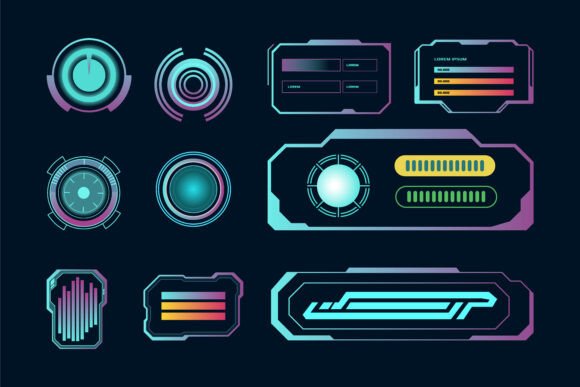
The Futuristic Window HUD Elements Set encapsulates this philosophy. The design features sharp angles, grid lines, and those signature bright blue neon frames that suggest energy and connectivity. These visual cues trigger a psychological response in the user, signaling that the interface is active, fast, and advanced. Unlike standard flat design elements which can sometimes feel sterile, the neon accents add depth and a sense of life to the screen. This makes the interface feel less like a static menu and more like a living system.
Furthermore, the inclusion of cyber window components allows for modular construction. Designers can stack, layer, and combine different parts—such as corner brackets, progress bars, data readouts, and status indicators—to create unique layouts. This modularity is essential for creating dynamic scenes where the UI needs to adapt to changing gameplay mechanics or data streams.
Why Vector Technology Matters
A defining characteristic of this collection is that it is a fully editable vector design. In the world of digital graphics, the difference between raster images (made of pixels) and vector graphics (made of mathematical paths) is profound. Raster images lose quality when enlarged, becoming blurry and pixelated. Vectors, however, remain crisp and sharp at any size.
For professionals working on the Futuristic Window HUD Elements Set, this scalability is a game-changer. Imagine designing a HUD for a mobile game and then needing to port it to a massive 4K cinema display or a VR headset. With vector files, the transition is seamless. The lines remain perfectly smooth, and the neon glow effects retain their definition regardless of the resolution. This future-proofs your project, ensuring that the assets you use today will still be relevant and high-quality years down the line.
Moreover, being fully editable means you are not locked into a single color scheme or shape. While the default aesthetic features striking bright blue neon frames, the underlying structure allows for complete customization. You can alter the curvature of a border, extend a line, or change the thickness of a stroke to match your specific brand guidelines or artistic direction.
Customization and Workflow Efficiency
One of the most significant pain points for designers is the time spent tweaking generic assets to fit a specific project. The Futuristic Window HUD Elements Set addresses this by offering 100% color customizability. This feature transforms a static asset pack into a dynamic tool. Perhaps your project requires a menacing red alert mode, or a calming green for medical interfaces, or a gold accent for a luxury tech brand. With a few clicks, the entire palette shifts while maintaining the integrity of the original design.
This level of control extends to resizing and modifying the geometry of the elements. Because the source files are included in EPS format, industry-standard software like Adobe Illustrator or Affinity Designer can manipulate every node and path. This eliminates the need for external plugins or complex workarounds. Designers can easily integrate these windows into their existing workflows, dragging and dropping them onto artboards and adjusting them in real-time.
The ease of modification also encourages experimentation. When the barrier to entry for changing an element is low, designers are more likely to try bold new combinations. They might overlay two different window types, invert the colors, or animate the neon frames to pulse with data activity. This flexibility fosters creativity and helps teams iterate faster, moving from concept to final product with greater efficiency.
Real-World Applications Beyond Gaming
While the term "HUD" often conjures images of video games, the utility of the Futuristic Window HUD Elements Set extends far beyond entertainment. As our physical world becomes increasingly digitized, the aesthetic of cyber interfaces is bleeding into professional sectors.
- Video Game Development: This is the primary use case. Developers use these elements to create health bars, inventory screens, map overlays, and mission briefings. The bright blue neon frames provide excellent contrast against dark, atmospheric backgrounds common in RPGs and shooters.
- Web and App Design: Tech startups and SaaS companies often adopt a "dark mode" aesthetic that benefits from these cyber elements. They can be used to highlight key metrics, create engaging loading screens, or design futuristic dashboards for cryptocurrency trading platforms.
- Presentation and Marketing: Business owners presenting cutting-edge technology can use these graphics to make their slides look innovative. A presentation about AI or blockchain looks significantly more compelling when framed within a high-tech window rather than a standard bullet-point list.
- Virtual Reality (VR) and Augmented Reality (AR): In immersive environments, UI elements must feel native to the space. The glowing, layered nature of these vector assets mimics light sources, making them perfect for AR overlays that users see through smart glasses or VR headsets.
Evaluating Suitability for Your Project
Despite its many strengths, it is important to consider whether the Futuristic Window HUD Elements Set is the right choice for every project. Not all designs require a high-tech, neon-soaked aesthetic. If you are designing a children's educational app or a minimalist lifestyle blog, the aggressive angles and bright blue glow might feel out of place.
Before integrating these assets, ask yourself if the visual tone aligns with your brand identity. Does your audience expect a sleek, futuristic experience? Are you trying to convey speed, intelligence, or advanced capability? If the answer is yes, then these elements are highly suitable. If your goal is warmth, tradition, or simplicity, you may need to modify the assets significantly or choose a different style entirely.
Another consideration is the complexity of the implementation. While the assets are easy to resize, animating them for a live interface requires additional effort. The vector files provide the static shapes, but bringing the neon frames to life with pulsing effects or scanning animations usually requires motion graphics software or coding knowledge. Teams should ensure they have the resources to handle this extra layer of production if dynamic movement is required.
Practical Expectations and Limitations
Users should also manage their expectations regarding the "out-of-the-box" experience. While the set includes source files in EPS format, it does not automatically generate a finished UI. It provides the raw materials—the bricks and mortar—but the architect (the designer) must still build the house. This means that while the set saves time on drawing individual lines, it still requires a thoughtful layout strategy.
Additionally, the reliance on bright blue neon frames, while iconic, can sometimes lead to visual fatigue if overused. In long-form applications like open-world games or data-heavy dashboards, having too much glowing blue on the screen can reduce readability. Best practices suggest using these elements as accents or framing devices, rather than filling the entire screen with them. Balancing the high-energy visuals with negative space ensures the interface remains clean and usable.
Conclusion
The Futuristic Window HUD Elements Set represents a powerful convergence of aesthetic appeal and technical functionality. By offering fully editable vector designs, 100% color customization, and easy resizing capabilities, it empowers creators to craft stunning digital interfaces with unprecedented speed. From the bright blue neon frames that define its look to the EPS source files that ensure its longevity, this toolkit is designed to meet the rigorous demands of modern design.
Whether you are a game developer building a new universe, a business owner launching a tech product, or a creator exploring the boundaries of digital art, understanding how to leverage these cyber window elements can elevate your work. They offer a shortcut to a polished, professional look while retaining the flexibility to adapt to your unique vision. In a digital age where first impressions are formed in milliseconds, having a high-quality, customizable interface toolkit is not just an advantage—it is a necessity.